
Most organizations have integrity on their list of core values. It appears in handbooks, on walls, and in onboarding decks. What is far less common is a clear understanding of what integrity actually looks like as a behavioral practice, moment to moment, in the decisions leaders make and the way teams work together. The gap between stating a value and living it is where workplace culture is actually determined. And that gap is rarely closed by adding another framework or policy. It is closed through experience.
Integrity in practice comes down to a small set of behaviors that compound over time. Honesty in the moments when it is uncomfortable. Reliability that teams can count on when conditions are uncertain. Accountability that does not disappear when something goes wrong. These behaviors build trust, and trust is the foundation on which collaboration, engagement, and long-term performance are built. A culture of integrity does not emerge from a values workshop. It emerges from leaders who model these behaviors consistently, and from teams that have enough shared experience to hold one another to them.
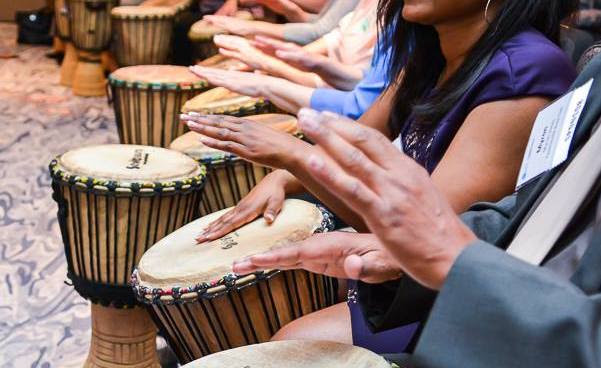
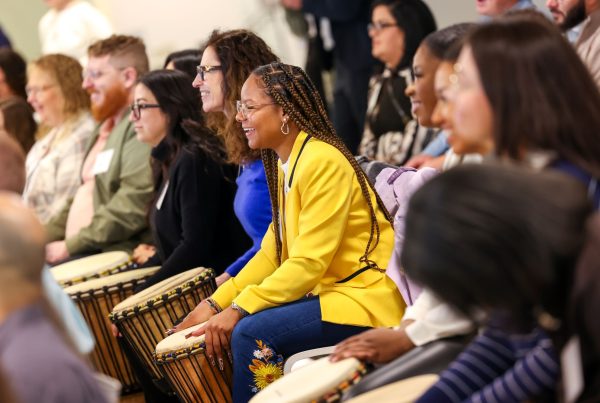
This is where a drum ensemble creates something that most leadership development programs cannot. In music, integrity is not abstract. Every player either holds their part, or they do not. If someone disengages, cuts corners, or stops listening, the ensemble feels it immediately. The group depends on each person showing up fully and honestly, contributing their part with consistency and care. When the ensemble locks in, it is because every player has committed to something shared. That experience of mutual accountability, felt in real time and without a safety net, is one of the most direct paths to understanding what integrity actually requires.
What people bring back to work from that experience is a felt sense of what it means to be someone others can count on. They have practiced, in a low-stakes but viscerally real environment, the behaviors that trust is built from. And they have experienced firsthand what a group is capable of when everyone in the room is playing with honesty and full commitment. In organizations where culture is shaped by what people do when no one is watching, that kind of internalized understanding is far more durable than anything written on a wall.
Are you looking for a way to engage your team with experiential learning? We help organizations meet their goals through experiential training programs that leverage the power of group drumming. Get in touch with us at connect@sewabeatsusa.com or 1-800-273-1465.