Leadership character is one of those qualities that is easy to claim and hard to demonstrate. Integrity, courage, empathy, self-awareness, accountability: most leaders would list several of these among their strengths. The place where character actually shows up is not in the easy moments, when decisions are clear, the team is aligned, and things are going well. It shows up in the difficult ones, when competing priorities create tension, when the right path is not obvious, and when the stakes are high enough that how a leader responds will be noticed and remembered.
Self-awareness is the foundation most of the other dimensions of character are built on. A leader who understands how they think, what triggers their reactions, where their blind spots are, and how their behavior lands on others has access to something most leaders lack: real-time information about themselves. That awareness does not eliminate pressure or make hard decisions easier. What it does is create a pause between what happens and how a leader responds, and in that pause is where character lives. Developing self-awareness is not a one-time exercise. It is a practice that deepens through feedback, reflection, and experience that actually challenges how a leader sees themselves.
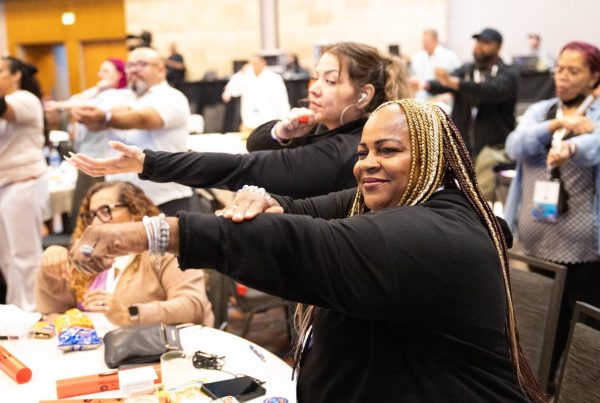
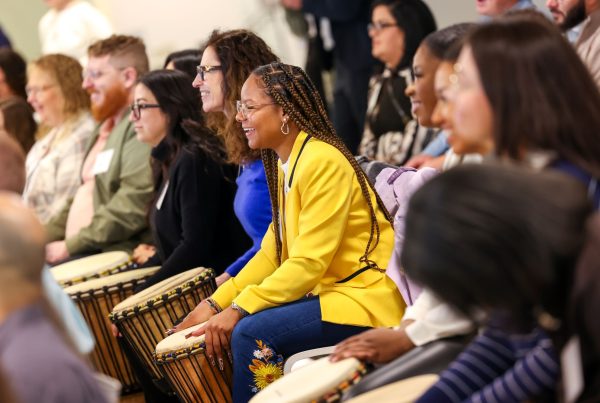
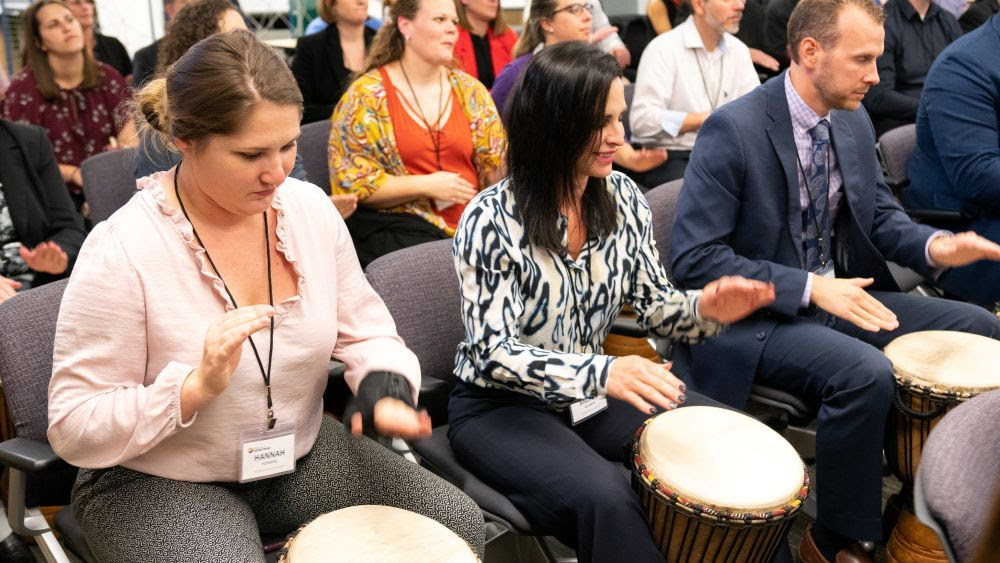
A drum ensemble creates exactly that kind of challenge in a way that is immediate and impossible to fake. In music, self-awareness is not a concept to reflect on later. It is a requirement in the moment. Every player must hear themselves in relation to the group, assess their own contribution honestly, and adjust without being told. When a player is off, the ensemble feels it. When they are fully present and locked in, the group rises with them. The experience surfaces a felt understanding of how individual behavior shapes collective outcomes, and it does so in a setting where there is nowhere to hide behind a title, a process, or a report. What gets practiced is the real thing: the capacity to notice, adjust, and lead from a grounded and honest place.
What participants carry back to work is more than awareness of their leadership style. They carry a physical memory of what it felt like to be fully accountable to a group in real time, and what became possible when they brought their most honest and present self to that experience. In organizations where character is often discussed but rarely developed in a meaningful way, that kind of experiential practice is one of the most direct investments a leader can make in how they show up when it matters most.
Are you looking for a way to engage your team with experiential learning? We help organizations meet their goals through experiential training programs that leverage the power of group drumming. Get in touch with us at connect@sewabeatsusa.com or 1-800-273-1465.