Toughness under pressure looks effortless in the people who have built it, which is why resilience is so often mistaken for a personality trait rather than a practice. The ability to stay grounded when plans fall apart, adapt without losing your footing, and keep moving forward can be developed and strengthened over time. It is a matter of training, not temperament. And like any practice, it requires more than information. It requires experience.
Resilient teams stay connected to one another while navigating difficulty. They communicate when things shift. They absorb setbacks without assigning blame and redirect their energy toward what comes next. Self-management plays a central role: the capacity to regulate your own response under pressure so that you remain a resource to the people around you rather than an additional source of stress. These are learnable behaviors, and they are developed through situations that actually require them, not through bullet points in a slide deck.
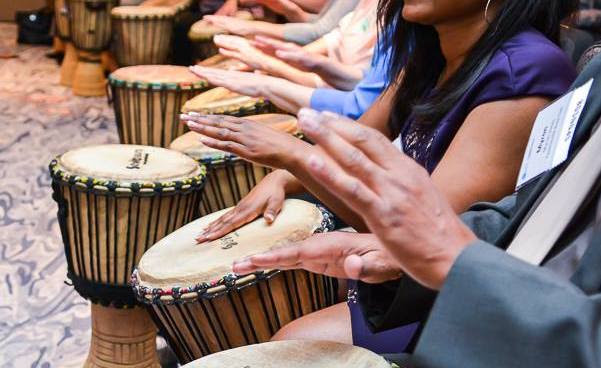
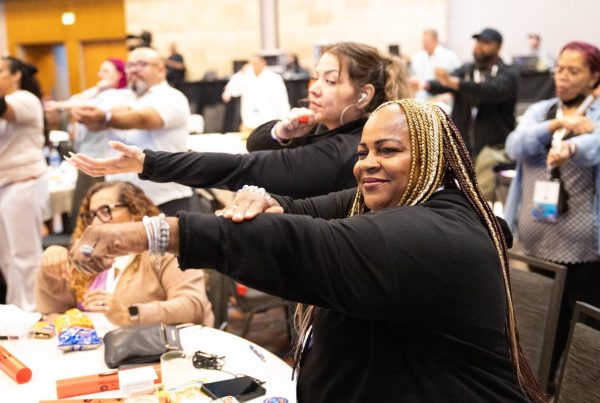
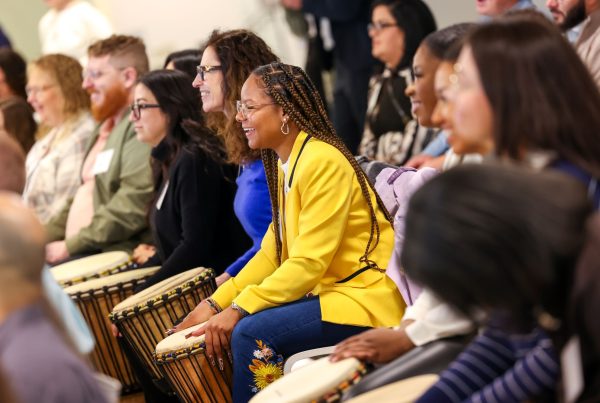
This is where a drum ensemble becomes one of the most honest learning environments available. Music, like resilience, is fundamentally a question of practice. No one sits down at a drum for the first time and plays perfectly. They listen, make mistakes, adjust, and improve through repetition and shared experience. In an ensemble, when a rhythm changes unexpectedly or the tempo shifts mid-performance, musicians do not stop and regroup. They absorb the disruption and continue. Participants experience this in real time: the moment of disorientation when something changes, the instinct to hesitate, and then the discovery that the group can hold together when everyone stays present and responsive. That is resilience felt in the body, not described in a handout.
What people carry back to work from that experience is something a PowerPoint alone cannot provide. They have a physical memory of what it feels like to stay in motion when the pattern breaks. They know what it sounds like when a team absorbs pressure without falling apart. And they have practiced, together, the core behavior that resilience actually requires: staying connected and adaptable as a group. In a workplace where change is constant and pressure is rarely optional, that kind of practiced resilience is what separates teams that endure from teams that grow.
Are you looking for a way to engage your team with experiential learning? We help organizations meet their goals through experiential training programs that leverage the power of group drumming. Get in touch with us at connect@sewabeatsusa.com or 1-800-273-1465.