Leaders are expected to make consequential decisions quickly and confidently, often with incomplete information, shifting conditions, and real stakes. The pressure to project certainty can be enormous, but the leaders who navigate uncertainty most effectively are not the ones who eliminate doubt before acting. They are the ones who have developed the capacity to move forward thoughtfully when the path is not fully clear. That capacity is not a leadership style. It is a skill, and like any skill, it is built through practice.
What strong decision-making under uncertainty actually looks like is worth examining closely. It starts with strategic clarity: a shared understanding of what the organization is trying to accomplish, which gives teams a reference point when conditions shift, and perfect information is unavailable. It also requires the ability to stay grounded under pressure, to regulate your own response so that anxiety does not narrow your thinking at exactly the moment when a broader perspective is most needed. And it depends on communication: the ability to listen actively, stay aligned with your team, and adjust collectively in real time rather than retreating into individual judgment.
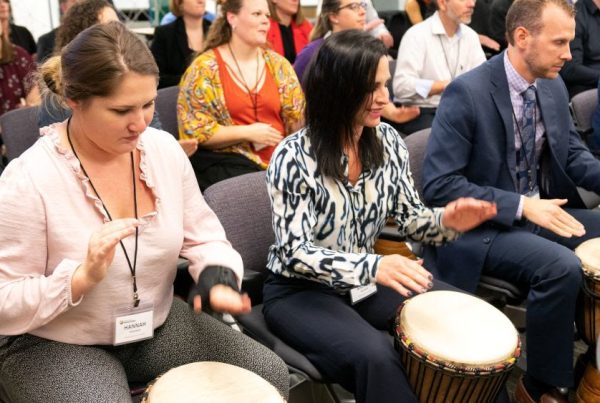
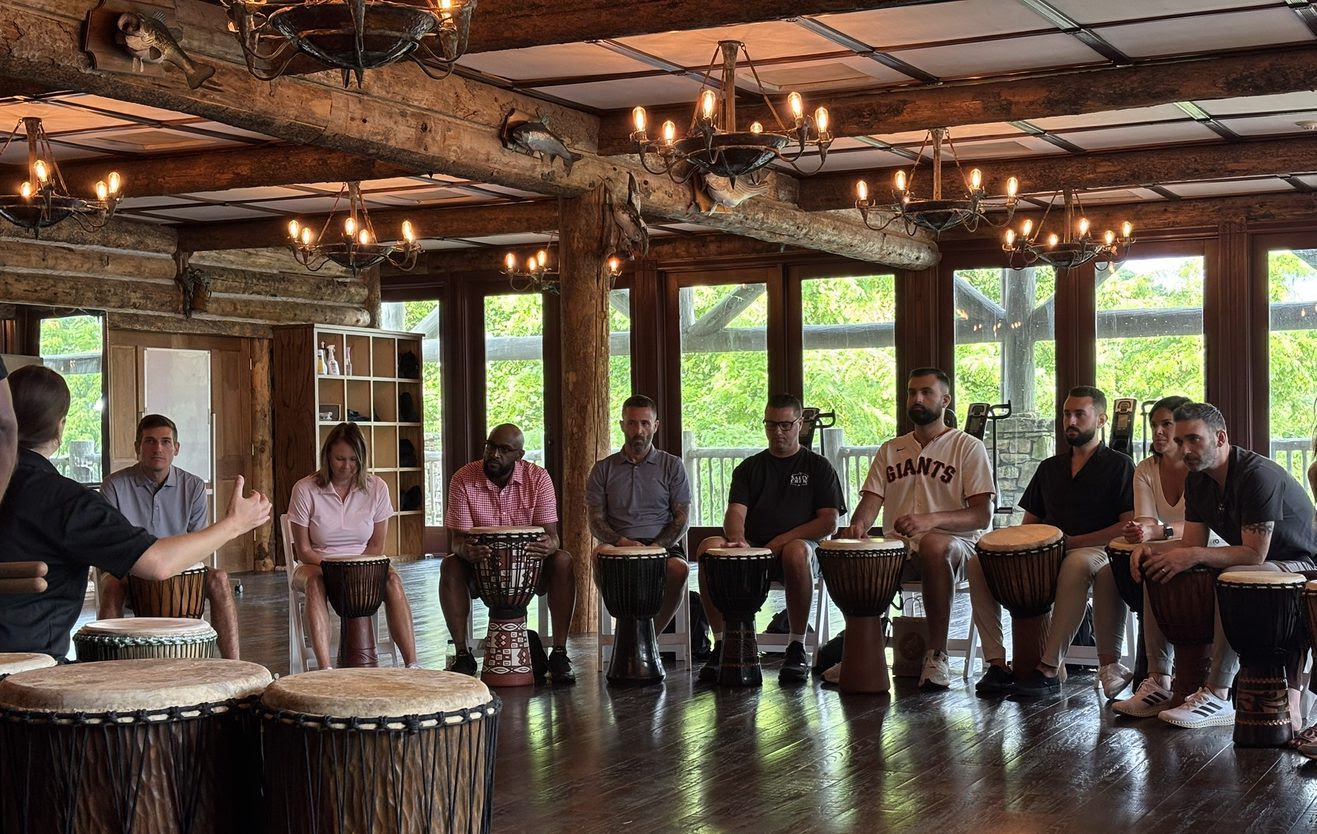
A drum ensemble is a precise and immediate environment for practicing all of these behaviors at once. In music, there is no fixed script. There is rhythm, timing, and the constant requirement to make decisions in motion. When the tempo shifts or a cue changes unexpectedly, players cannot pause to deliberate. They listen, read the group, and act. The experience surfaces something that classroom training rarely can: the actual felt difference between freezing under uncertainty and staying responsive within it. Participants discover, in real time, that the group can move through ambiguity together when everyone stays present and committed to the shared rhythm.
What transfers back to the workplace is more than awareness. It is a practiced orientation toward uncertainty, one that treats incomplete information as a condition to navigate rather than a problem to solve before moving. Teams that have experienced this together carry a shared reference point: they know what it feels like to make decisions without all the answers and to come out the other side stronger for it. In a business environment where volatility is no longer the exception but the baseline, that kind of practiced confidence is one of the most valuable things a leader can develop in their team.
Are you looking for a way to engage your team with experiential learning? We help organizations meet their goals through experiential training programs that leverage the power of group drumming. Get in touch with us at connect@sewabeatsusa.com or 1-800-273-1465.